Dune – A Baroque Sculpted Mess/A Very Long March Across Shifting Sands — Wannabe Film Critic

Today’s films both have the same name. The first is David Lynch’s 1984 Dune a cult classic or complete travesty depending on one’s point of view, and indeed there are many to consider. The other Dune is Denis Villeneuve’s 2021’s offering which seems to be garnering acclaim throughout the criticsphere. Naturally here at Wannabe Film […]

Dune – A Baroque Sculpted Mess/A Very Long March Across Shifting Sands — Wannabe Film Critic

The Master

Ever since the day of the Fateful light, the Holy light, the Celestial light or whatever the historians in the high fingered towers called it, Frizzlefish, had been depressed. Initially he had been cross that he had missed the alignment, well cross was a little bit of an understatement… perhaps livid had come closer to his actual feelings. Initially his anger had been directed at his young apprentice Evercreech (just who was he to have witnessed the Great Conjuncture anyway?) but then the initial resentment had simmered away as he found himself in possession of a celebrity, of a potential seer, mayhaps even a prophet? The prospect of having an apprentice who had actually learned something unlike the parade of dunderheads who had come before seemed like maybe a ringing endorsement of his methods. So it was this unhealthy mix of resentment and pride that Frizzlefish had found himself initially filled with.

Travelling back from that encampment had become something of a blur in his mind. He had requested local villages to help pack up, but they were all wary of his Apprentice, the Boy With The Sky In His Eyes as one old man dubbed him and Frizzlefish, although unable to openly admit it, felt a similar wariness. The Boy With The Sky In His Eyes himself seemed oddly changed too, a calmness, a serenity had come upon him, oceans lapped behind his corneas, his eyes were a paradise of soft blues. Gone were the heavy hazel set eyes that Frizzlefish had become so used to seeing, eyes that usually looked out from behind his heavily furrowed brows. Now the brows seemed soft, the Apprentice, although only 20 years old, seemed to have lost years yet somehow gained a timeless quality to him, a man outside the normal realm of ageing, a man outside of life itself.

There had been little conversation those few hours and days as they travelled back to the Castle. Evercreech did his work uncomplainingly, packed up the brass telescopes and cauldrons and they slowly meandered homewards along the river. One night though Frizzlefish had brought up the subject: they were sat toasting rabbit paws by the fireside and he could not help but whisper…. “What was it like? Like to see? To really see?”

And Evercreech had replied with a grunting and a gurgling and Frizzlefish thought some terrible beast had inhabited him or invaded the camp or something for all of five seconds before he realised Evercreech was laughing at his question. Evercreech bestowed a hearty belly laugh, a gaping mouth and a hooting cacophony of sounds. Frizzlefish felt a dull roar of anger in his head and belted his Apprentice around the ear, but Evercreech didn’t stop, Frizzlefish, a tired old man, had not the energy to continue any kind of beating but instead stormed off into the surrounding woods to sulk and, whilst there, collect firewood as he collected his thoughts.

And so it had been, this resentment in his heart as they trudged home, but when he appeared at the Castle gates the denizens had swarmed around him and Evercreech and his pale blue eyes. They had both been summoned to the High Chambers, had met with the Lord himself. Scientists and sorcerers had to be sent for. Frizzlefish found himself at the centre of this attention for Evercreech would do little more than grin and sit serenely. Frizzlefish embraced his new role as Keeper Of The Boy With The Sky In His Eyes (as he imagined the title to be) and fielded questions from dignitaries, nobles and academics. He found himself enjoying the attention, he spoke warmly of how he had trained the boy to observe the Conjunction, how he had considered Evercreech to be worthy of looking upon the stars and achieving enlightenment.

What exactly this “enlightenment” was the scholars, scientists, sorcerers and statisticians never found out. Frizzlefish didn’t know either, but with his ability to waffle undulled and with all his laurels and credentials they were happy to sit and make eager notes. As for the Boy With The Sky In His Eyes he had disappeared from view. Frizzlefish had had him clothed in white robes sent down from the Lord’s tower, a high honour, but when he paraded in front of the scholars they always seemed to be covered in grime and dust. Considering Evercreech to be unsightly he mostly seemed to be spending a lot of time in the high attics contemplating quietly. Some of the more adventurous scholars came to see him and look into milky blues eyes, but none of them stayed long, it was as if his presence were enough to shatter some of their deeply held illusions on their own importance. So Evercreech stayed away from the circus mostly, being brought up his dinner to one particular attic that he seemed to favour, having been granted permission to remain wherever so he felt most comfortable. The prestige of having one so Enlightened in the Castle persisted for some months, Frizzlefish spinning out more and more stories and writing treatises on the subject.

Eventually the scholars stopped coming. Frizzlefish sent out more letters but everyone seemed satisfied with what they had already seen. In his office Frizzlefish sighed and leaned back in his chair. Yes he had been promoted now, he no longer slept in the encampment outside the Castle walls. He had a part of a floor on a tower to himself now, a desk, a stack of books and a tiny bedroom beyond. He looked at the latest notes he had started writing on the “blue eyes” – something lofty about the blue being seen as a symbol of the ancient Enchrachian king’s wives, dressed as they often were in blue… until he had remembered that purple had been the traditional colour of their cloth…. He crumpled the parchment and threw it into the mean fireplace squeezed into the corner of the room. Frizzlefish got up from his desk, it was lit with a small electrical lamp, something he had not had before… before the “blue eyes.” He switched the lamp off and looked out of the window onto the hinterlands below the Castle. He could make out the site far below of their last encampment, very little trace remained of where he and Evercreech had over wintered every year for the last six. The moon was full and cast it’s ghostly light over the scene. Frizzlefish felt a pang of nostalgia, although old he missed nights by a proper fire with his Apprentice and their meals of impromptu fire cooked animals. He suddenly yearned for those days, simpler days. He drew his cloak about him and slipped from the small room he now called home.

He walked the empty corridors of the vast castle, spiralling upwards through forgotten back entries and draughty stone staircases. He eventually reached attic level and pushed open a heavy hinged door. The scene that greeted him seemed unreal. A vast window let in a sheath of moonlight, it pooled in the middle of the attic floor, empty save for a figure in dirty white sat cross legged, highlighted by this seemingly unearthly light.

Frizzlefish approached, he suddenly felt a fear, a nervous affliction of a sort he had not felt for a long time. He started to speak, the words tumbling from his mouth in haste and disorder. “Sorry… I haven’t… I haven’t seen you in such a long time, I have been busy, papers, lectures, documents, you know how it is…. But I didn’t forget about you, it’s just I…” he paused. For the first time in his life, old Frizzlefish was completely tongue tied in front of his young apprentice. This was unprecedented. He tried to rally words again but instead Evercreech spoke.

“Sit” he grunted. “Sit down Master.”

Frizzlefish quietly obeyed and sat facing Evercreech. He noticed Evercreech’s eyes were closed, his robes seemed to billow round him although there was no breeze. My god… thought Frizzlefish he has become something else….

Evercreech spoke again. His voice was low, “Ere, Master, you are troubled, why?”

Frizzlefish pulled himself together, creakily he spoke, “All my life I have studied magic. Studied wisdom. Studied ancient texts. All my life I have striven to understand the universe… and what… what have I to show for it? These wrinkles and these old bones! And my eyes strained by candlelight, pouring over maps and manuscripts, my hands burned from mixing potions and pollutants…. and…” He suddenly broke down crying, his sobs old and feeble “And I still don’t understand it… I don’t know anything!”

Evercreech sat and listened to his old master’s tears, a soft smile played on his lips. “And you think, Master,” he said calmly, “you think you should have been the one to see the event in the sky, the one that struck me dumb?”

“Yes” said Frizzlefish, simply and sadly.

Evercreech finally opened his eyes and looked at his master huddled on the floor. He smiled and said “Ere, well master, I still think you’re the most wised and cleverest person I ever met. I been trying to get away from them crowds that been coming for ages and you kept them busy so they stopped hasslin’ me. That’s pretty wise, eh?”

The old master found himself chuckling lowly at what his young apprentice had said. It was true, he had kept them busy with his notes for a long period. Some of his theories had got so wild he half expected the scholars to get up and leave. But no they had sat with an earnest look upon their faces as they scribbled down his words. He wiped away the tears and sat and looked calmly into the face of Evercreech. Suddenly, with a shock, he realised what was different, Evercreech no longer had the blue eyes! Instead his eyes were of deepest brown, they seemed darker than they ever had been before but maybe that was just the juxtaposition in what Frizzlefish had expected to see. “Oh…!” was about all he could squeak, but Evercreech just smiled back, understanding his alarm.

“Master, if it’s alright with you, can I continue being your apprentice? I was worried that you might be put off now you’re in with all those fancy scholars and that? I been turning over in my head what I wanted these last few weeks and I realised I wanna find out more about all this stuff ye see. Cosmos and that. And see you are pretty smart and that, I was wondering if… if you could teach me?”

Frizzlefish stood up, grinning in the moonlight. His depression suddenly lifted, his old eyes filled with tears. He was glad to be useful again.

American Animals and the Unreliability of Narrative Perception — Wannabe Film Critic

American Animals is a 2018 film directed by Bart Layton.  Claiming to be based on a true story it uses a mix of acted scenes interspersed with “talking heads” style reminisces with the people from whom the story is inspired.  The event that is alluded to in American Animals was a 2004 attempt at an […]

American Animals and the Unreliability of Narrative Perception — Wannabe Film Critic

‘Withnail and I’ – the End of An Age(s)?

societeroyale's avatarWannabe Film Critic

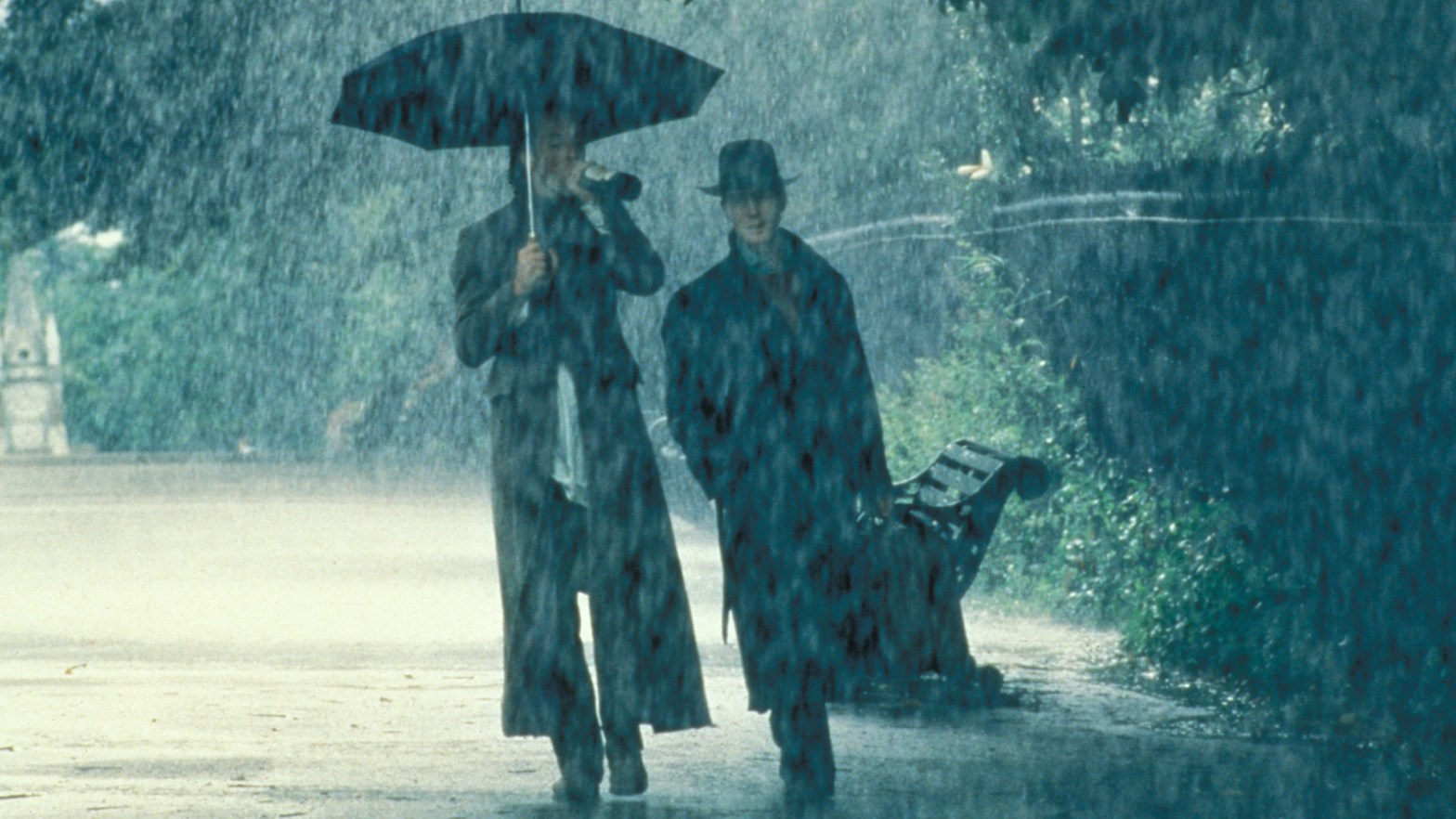
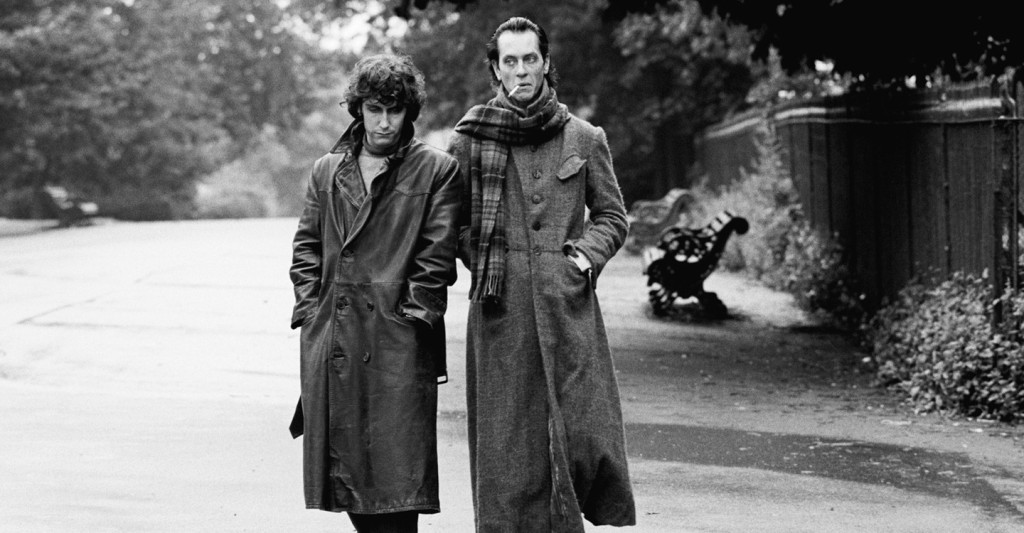
It is probably about time I got round to writing a review, or rather, a meditation on the 1987 film Withnail and I. Besides being one of my all time favourite films I believe it’s worthy of some genteel dissection and maybe a little critical discussion. That said, a lot has been written about Withnail and I, it’s one of the most quotable films amongst certain demographics; students in particular spring to mind. Indeed on release the film wasn’t a box office smash, it took a while to find it’s “cult” status and amongst students sharing copies on VHS tapes it didn’t take too long to become a fixture on the uni experience.

Withnail certainly seemed to speak to students; the depiction of a hard drinking, drug fuelled lifestyle lived in squalid surrounds was, and is, a familiar one to many. The situation of these two jobbing actors…

View original post 1,249 more words

Kurt Vonnegut, the myth of free will, happiness and the 20th Century

I was a victim of a series of accidents, as are we all

I first encountered Kurt Vonnegut’s books one sunny afternoon on the south coast of England.  Someone had lent me a copy of Slaughterhouse Five to read a few weeks prior and I had slipped it into my rucksack before starting my first attempt at long distance walking.  I had chosen, rather naively, the South West Coastal Path simply because it was an area I was un-familiar so therefore be interesting to visit.  And one which I had decided I couldn’t get lost on, so long as I kept the sea on my right hand side.  What I didn’t know was that the SW Coastal Path was notoriously hilly, with chalky cliffs rising spectacularly and then falling dramatically down to hollow bays that reached to the sea.  All this with a heavy rucksack and a sweltering early English summer meant it was hard going and my daily mileage was low.  Having woken up early one morning, packed up my tent, eaten breakfast and marched to Lulworth Cove by twelve noon, I found the next stage on my journey blocked by a wall with a locked gate.  Enquiring in a local shop I was informed that “the Range” beyond the gate was closed for army shooting practice till Saturday.  Luckily it was Friday and I only had a day to kill before I could continue my walk but it was a bit of a blow having psyched myself up for being in Swanage by the day after.  So faced with an amount of idleness on my hands I sat on the cliff top above the cove and fished into my super sized bag till I found Slaughterhouse Five.  And I read and read.  I read till the sun went down and I had to set up camp in a nearby field.  And thus started my continuing infatuation with Mr. Vonnegut.  I’m still working my way through his books, but I thought it was about time I did a little investigation into what makes them so memorable. 

One of the recurring themes of Vonnegut’s books that stand out for me is that many of his characters seem to lack agency in the world.  It often seems like their destinies are planned or pre ordained (Much like my inability to continue my walk that day in Lulworth!)  The plots in most of his books are driven by factors beyond man’s control, be they external events, alien interferences, time slips or internal chemical imbalances. 

Vonnegut is very much an author of the 20th century, he is a man shaped by its most important events: the Second World War, the Atomic Era, globalisation and of course technological advancement beyond man’s wildest dreams.  Wildest nightmares, perhaps?  For the average man it often seems that these global events are beyond our control, we can only react.  Vonnegut attempts, often through humour and an acceptance of fatalism, to look at ways we can cope with the knowledge that our actions, therefore our destinies, may not be our own.

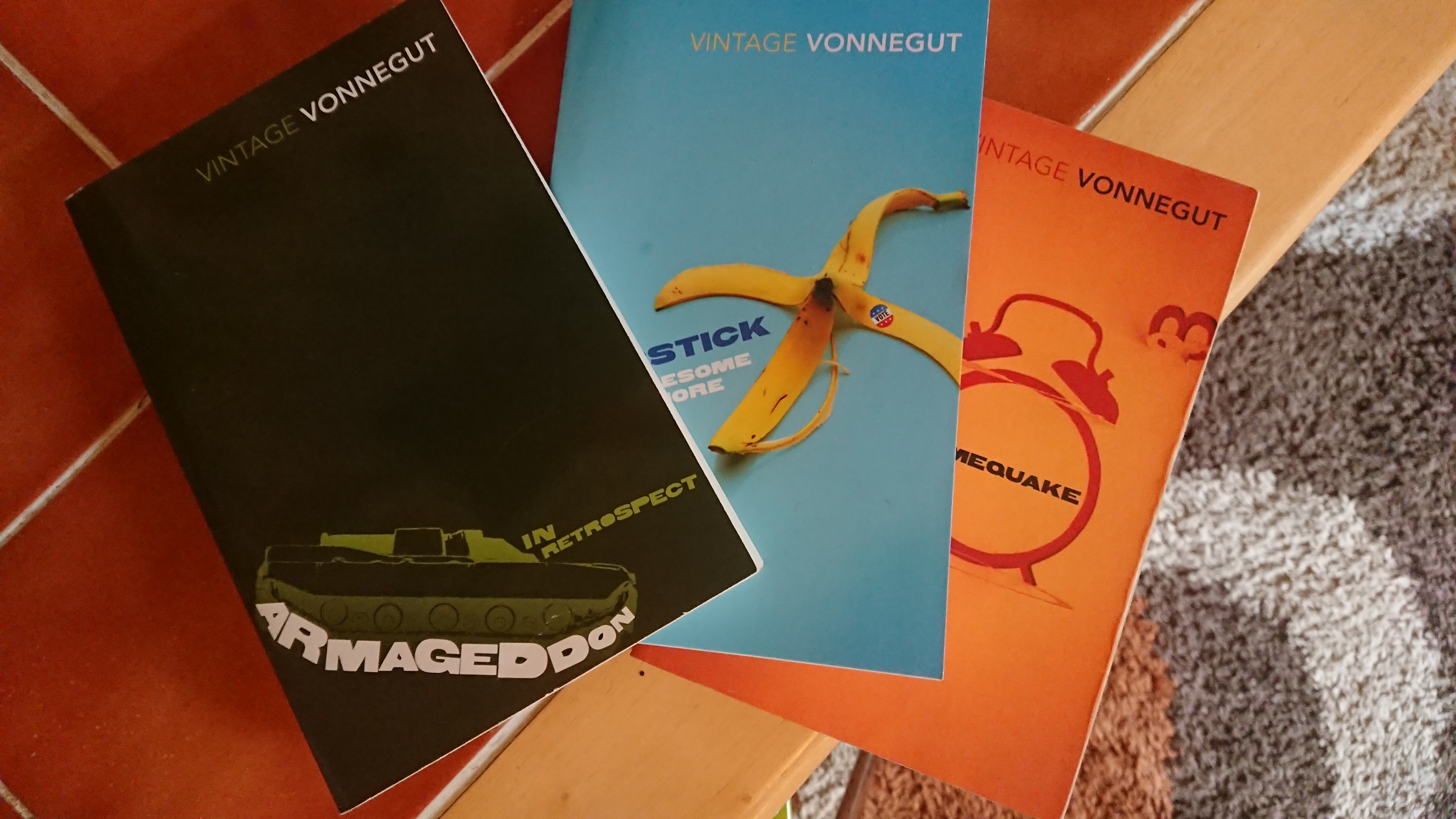
His most famous novel, the one I have already mentioned, Slaughterhouse Five centres round his recollections of the destruction, by the Allied forces, of Dresden in Germany; a catastrophic firebombing, a horrific and unimaginable event.  This scene and stories about his war years have been visited a few times in his other short stories and novella (Armageddon in Retrospect)as Vonnegut seems to have attempted several times to put this story into print in exactly the right way.  It’s not till Slaughterhouse Five that he seems to have achieved something he is mostly happy with.  Vonnegut describes coming out of the concrete basement of the meat processing plant he and his fellow POW’s had been ordered to shelter in to find a world changed beyond recognition.  Such was the impact of the war on the world as a whole, a total war that changed western society forever and ever. 

Many of Vonnegut’s other novels are a retelling of how the 20th century was reshaped by these powerful and inhumane forces.  

So it goes.

His book Slapstick wrestles with the way modernity is causing upheaval in 20th century American society.  And to a greater extent the new feelings of loneliness and isolation our brave new world has engineered.  Vonnegut recounts in his novel how in different parts of the USA different nationalities would originally settle in clusters.  In particular the Germans who settled the Midwest, in states such Wisconsin, and Vonnegut’s own Indiana.  Of course Vonnegut himself with a German name tells how people in the nineteenth century openly spoke German.  Of how that part of the United States had a distinct German-American culture, until the First World War shattered that particular American identity apart.  The German-Americans homogenised, disappeared into the ether, folded their language and culture into the Anglo-sphere for fear of being labelled spies or traitors – the enemy within.  Vonnegut writes in Slapstick:

Children in our family were no longer taught German.  Neither were they encouraged to admire German music or literature or art or science”

Families and communities across the United States have been shattered apart by “progress”, spread thinly across the mega state.  Nobody has any relatives any more, Vonnegut said when asked in an interview about Slapstick:

Until recent times, you know, human beings usually had a permanent community of relatives. They had dozens of homes to go to. So when a married couple had a fight, one or the other could go to a house three doors down and stay with a close relative until he was feeling tender again

Hence the need for artificial family generated by the state, the character Wilbur, running for office as President comes up with the idea of having additional names and numbers assigned to citizens thus giving them a set of new roots and a sense of brotherhood wherever in the country they are.  He demonstrated this by the reasoning that even a bum on the street would be no more lonesome than anyone else, no more worst off than the average American.  Wilbur said he would say to them, if pestered for charity:

“Buster – I happen to be a Uranium-3.  You happen to have one hundred and ninety thousand cousins and ten thousand brothers and sister. You’re not exactly alone in this world. I have relatives of my own to look after. So why don’t you take a flying fuck at a rolling doughnut?  Why don’t you take a flying fuck at the moooooooooooon?”

Now loneliness will forever be eradicated – Lonesome No More! as the slogan on Wilbur’s badge proclaims, even as the power of the USA fractures into petty kingdoms and tribes, devastated by gravity fluctuations and disease, that at least people have their new families to cling to as the world falls apart.

In many of his novels it often seems like the entire 20th century is depicted be like a nightmarish ride.  Characters in his stories appear to be pawns in schemes controlled by greater external agencies.  That unfathomable conspiracies move forward the plot, the motivations are deeper and darker than the characters comprehend, often more some than they even can comprehend.  Indeed in Breakfast of Champions the narrative is revealed to be controlled by an invisible author – Vonnegut himself is pulling the plot strings.  He tells this to the ubiquitous Kilgore Trout, the beleagued science fiction author who appears in so many of Vonnegut’s works, playing different roles having a slightly different backstory every time.  It could be argued that Trout often is a substitute for Vonnegut in the stories, the character who sometimes most often resembles the author himself, an outsider, an author of science fiction.  But however in Breakfast of Champions, Vonnegut himself appears in the text to reveal to Trout that the entire universe is his creation by his pen.  That Trout and the others characters are mere creations of the author with no free will of their own.  That the universe is in fact completely machine like.  The humans are machines also; reacting to certain chemical balances and inbalances in their brains to produce their actions.  Vonnegut is like a god, ruling over his characters.

An example of Vonnegut’s depiction of the powerlessness of man comes from the nature of Billy Pilgrim’s existence.  In Slaughterhouse Five, Pilgrim, is described as having “come unstuck in time.”  Thus Pilgrim has no agency over his actions; his destiny is set in stone, from the date of his birth to his dramatic murder.  He can visit all of these locations in no sequential order and relive each part at any time seemingly at random.  This is how existence is seen by the Tralfamadorians, an alien race who feature in several Vonnegut novels.  They are at peace with understanding that the universe is unchangeable, they know how the universe began, they too know how the universe will end.  Both these events are unavoidable, so why worry?  Free will may not exist at all, but Vonnegut repeatedly implores the reader to thus make the most of here and now.  My favourite Kurt Vonnegut quotation is one he attributes to his Uncle Alex;

“I urge you to please notice when you are happy, and exclaim or murmur or think at some point, ‘If this isn’t nice, I don’t know what is.”

For me, this sums up Kurt Vonnegut’s extraordinary outlook on life.  A man who lived through the horrors of man’s cruel indifference to man, yet maintains a sense of humour and the feeling that life is somehow always worth living, no matter how horrible the horrible bits are.  There is always something to be gained, to learn amongst the absurdity of existence.  Life, like the 20th century, is a crazy ride that we should remember to sometimes enjoy.

“A purpose of human life, no matter who is controlling it, is to love whoever is around to be loved.”

Nettling

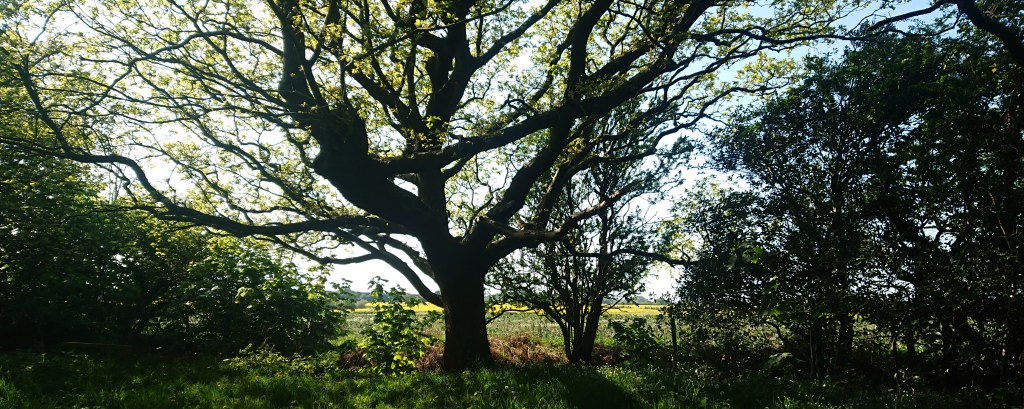
Come early Spring and the woodlands, so long barren and chill start to revive with life.  And every year this still fills me with wonderment and surprise.  As a frequent visitor to the forests in Winter I have become accustomed to these silent wide open spaces.  To see the spaces between the trees being filled with undergrowth is always a happy sight.  Not only for the joyous rebirth taking place but for the foodie options now available….

Obviously the first thing to write about nettle picking is to remind you to beware of the sting!  Though of course you knew that anyway but it’s best to put a little disclaimed in.  I usually use some thick ski-ing gloves but gardening gloves should do the trick.  When nettle picking it’s best to look for the younger, smaller nettles.  And to probably take only the nettle tops.  (You can of course eat the lower leaves but they are more stringy.  I learned this mostly through trial and error and produced some rather strung out soups back in my uni days.)  Also the nettles away from the path are probably less likely to contain contaminates, and the ones on the side of the road are of course a no-no due to car fumes!

I simply use a pair of kitchen scissors to cut the nettle tops I need, before furtively bagging them into a plastic bag.  How many nettles will I need?  Well that’s an interesting question, I usually end up with too much, but a bagful isn’t too bad for a quiche or a soup.  You might want to pick more if you are making pesto as the nettles tend to reduce, especially if you want to make a few jars worth.

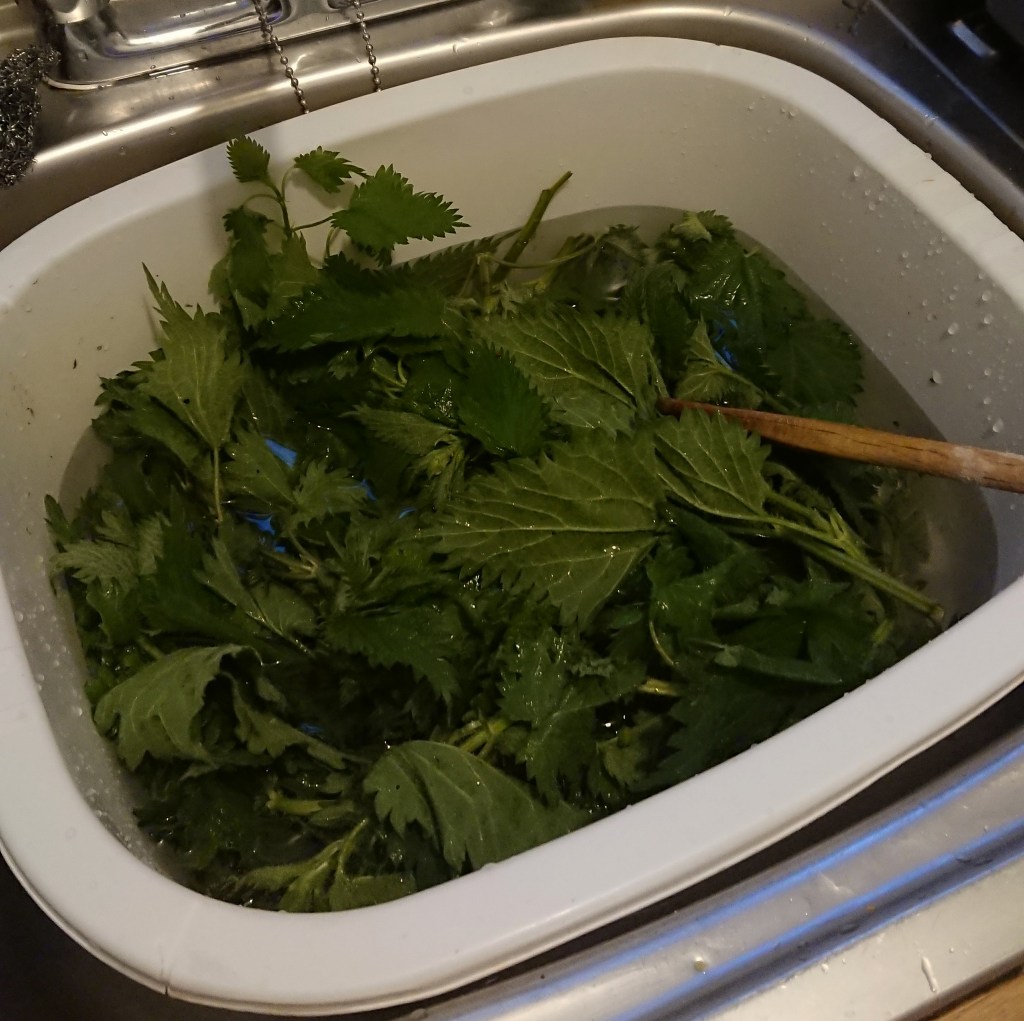
Once you’ve got your nettles back home and you want to make something, first plan is probably to empty them in to the sink and give them a good rinse under cold water – not touching them obviously as they’re still highly stingable!  Rinsing is necessary to remove anything that may have sneaked into your kitchen from the woods. 

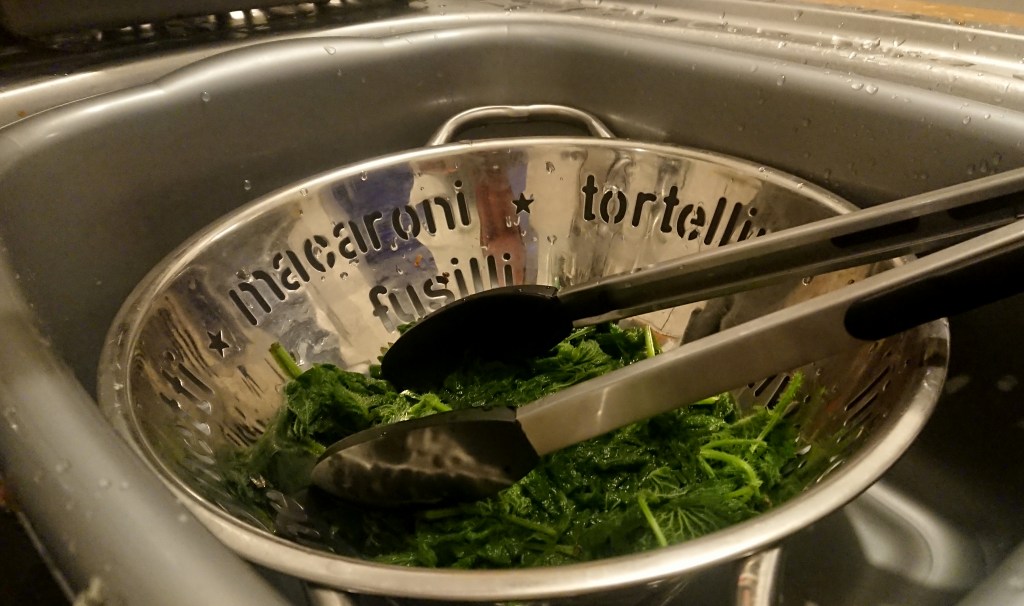
Whilst your nettles are in the sink, heat a pan of water till boiling.  This is so you can blanch your nettles.  Drop your nettles straight in (using tongs for safety) and let them sit in the boiling water for about 3 or 4 minutes or so.  Then pour the hot water and the nettles into a colander before pouring cold water onto them to stop them cooking any further.  The sting should be completely eradicated now and they will be safe to handle.

Some Nettle Recipes….

Right, so you’ve got your nettles, but what can you actually do with them?  What do they even taste like???  Well if your unfamiliar, I’d describe them as similar to spinach… but somewhat more earthy in fact.  I like to pair mine with other vegetables such as potato, leeks and carrot if I’m making a soup.  Garlic and bacon and other herbs are a good combination too.  I’ve got a few recipes I generally experiment with; let’s start with one that’s definitely a winner.

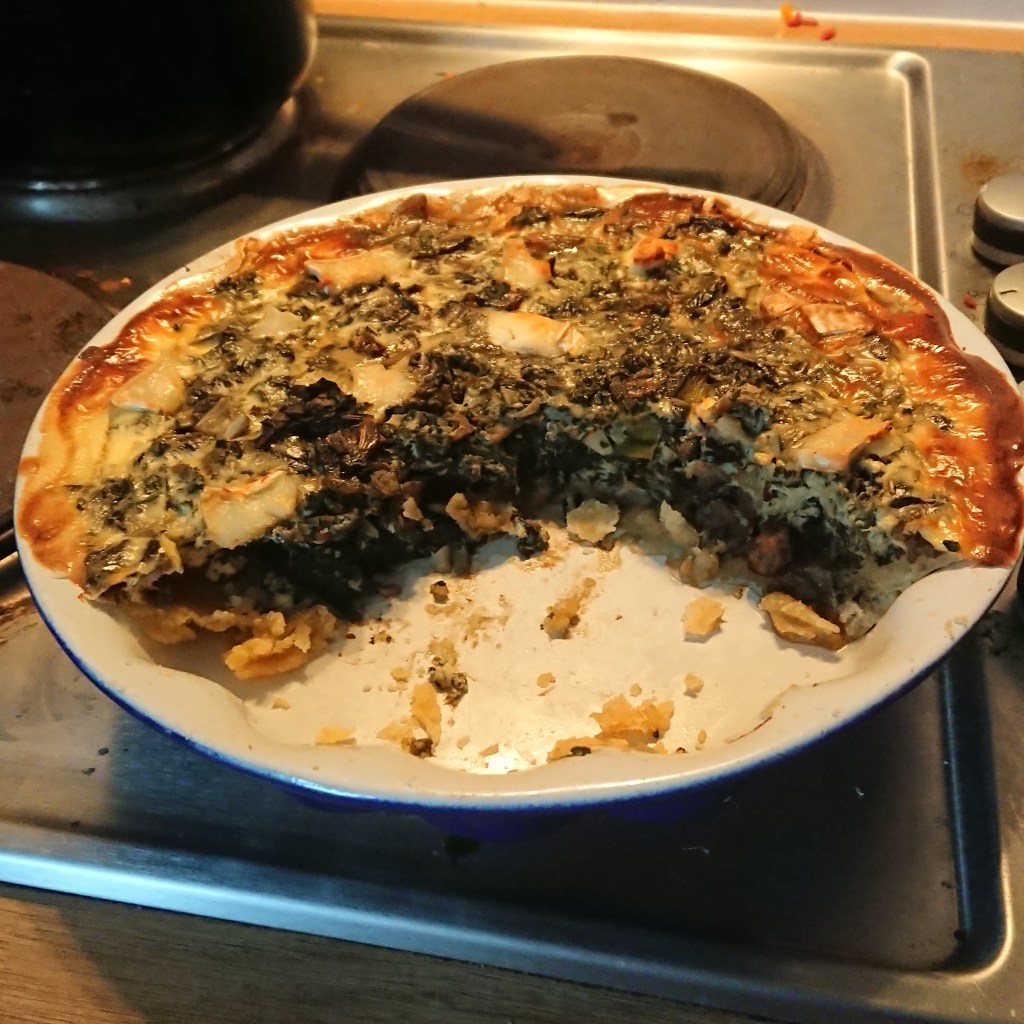
Nettle Quiche

Ingredients:

-Nettles

-Onion

-Mushrooms

-Bacon

-Garlic

-Oregano/Mixed herbs

-Eggs x 6

-100ml Cream

-Cheddar cheese

For the pastry:

-250 grams of flour

-100 grams butter

-Salt

Start by preheating the oven to 180 degrees.

Prepare a shortcrust pastry, 250 grams of plain flour, 100 grams of warmed butter, rub with your fingers until it resembles bread crumbs.  Add a pinch of salt and 3 or 4 table spoons of water mix till a firm dough.  Kneed the flour gently on a dusted surface.  Wrap in cling film and place in the fridge till later.

In a frying pan fry the onions until transparent.  Add mushrooms, bacon (if using), lots of garlic, fry with oregano or other mixed herbs.

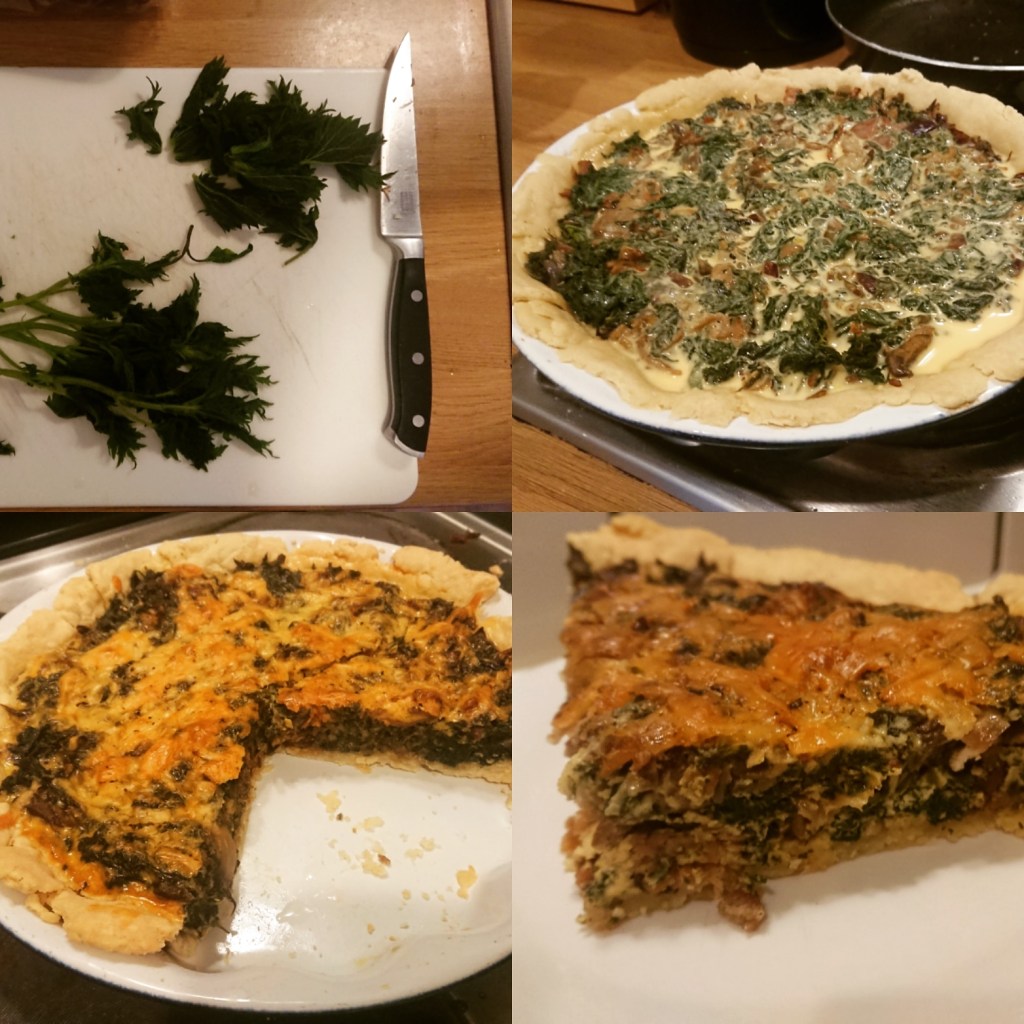
Chop the nettles up and throw them in.  Fry like spinach. 

Whilst this is all simmering on the hob, mix the eggs and cream in a jug to create a rich creamy filling.  Grate some cheddar into the mix

Remove your pastry from the fridge.  Roll out till flat and place in a low rimmed pie dish.  Cover the pastry with some grease proof paper and weight down with some pasta.  Pop in the oven for ten minutes so it’s blind baked.

Right, now all your elements can combine together, mix the fried content of the pan with the liquid before pouring all of it in to the pastry base.  Bake at 180 degrees for about half an hour or until browned.

I always enjoy my quiches cold, but obviously it’s up to you how you eat them.  Let me know if you enjoyed this delightful dish.

Design a site like this with WordPress.com
Get started